
Ear seeds & auricular points
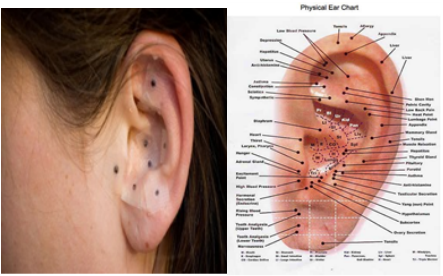
An example of ear seed placement beside a traditional ear chart. Point selection and any home-care instructions are discussed with your practitioner.
What is the difference between ear acupuncture and ear seeds?
Ear acupuncture uses needles; ear seeds use small seeds or beads held against the outer ear with adhesive. Ear seeds are a form of acupressure and may appeal to people who prefer a non-needle option. They are placed on the external ear, rather than inside the ear canal.
Before choosing a method, discuss your goal, previous experience, and comfort with touch or adhesive. Let the practitioner know about hearing aids, recent piercings, irritated skin, or materials that have caused an allergic reaction. The choice should account for how the treatment will fit into your day.
What does research say about auricular therapy?
NCCIH describes promising findings for some pain concerns, while results vary across auricular techniques. Findings about ear acupuncture do not necessarily apply to ear seeds. Ask what the evidence shows for your specific symptom and the method you are considering.
People sometimes ask about ear seeds for stress, sleep, cravings, or weight management. Those goals need a careful conversation about evidence and the role of established care. Ear seeds do not replace mental health treatment, an ADHD care plan, addiction treatment, or nutritional and medical support for weight-related concerns.
How do I care for ear seeds after a visit?
Follow the instructions given for your particular ear seeds, including whether and how to press them, when to remove them, and when to contact the clinic. Ask for a demonstration before leaving. The amount of pressure and wear time should be explained for your skin and the material being used.
Remove the adhesive and contact the clinic if you develop irritation, increasing tenderness, or a rash. Persistent redness, swelling, warmth, or drainage deserves medical attention. Keep loose seeds or beads away from young children, and tell the practitioner if you cannot comfortably inspect or remove the patches yourself.
Further reading
Explore the research and safety information behind these treatment discussions.
Health information is educational. Your practitioner can discuss how it applies to your history and current medical care.